California, with its diverse climates and varying water availability, often presents challenges for maintaining a lush natural lawn. In such circumstances, artificial grass emerges as an excellent alternative due to its minimal maintenance requirements and ability to sustain a vibrant appearance year-round. This guide will detail the steps to install artificial grass in California, ensuring a beautiful and sustainable landscape.
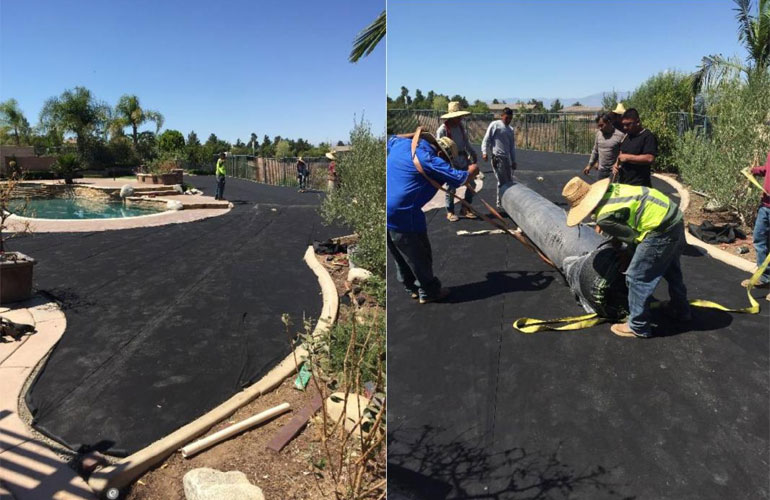
Step 1: Planning and Preparation
Before diving into the installation process, meticulous planning and preparation are crucial. Begin by measuring the area where you intend to install the artificial grass. Accurate measurements ensure you purchase the right amount of turf and materials.

Step 2: Gather the Necessary Materials
To install artificial grass, gather essential materials, including artificial grass rolls, infill material (usually silica sand or rubber crumbs), geotextile fabric, nails or staples, and adhesive.
Step 3: Remove Existing Turf and Prepare the Surface
Start by removing the existing natural grass, weeds, and debris from the area. Level the ground and compact it to create a stable base. Ensure proper drainage by sloping the surface away from any structures.
Step 4: Lay the Geotextile Fabric
Lay a geotextile fabric over the prepared surface. This fabric acts as a weed barrier and helps with drainage while ensuring that the soil does not mix with the base.
Step 5: Roll Out and Trim the Artificial Grass
Carefully unroll the artificial grass and position it over the geotextile fabric. Adjust the placement and trim the edges as needed to fit the area accurately.
Step 6: Secure the Grass
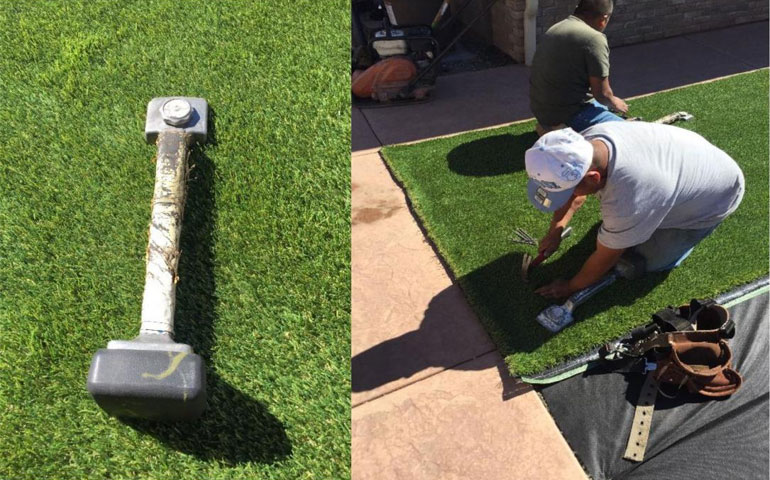
Secure the grass in place using nails, staples, or adhesive, ensuring a tight and wrinkle-free installation. Make sure to distribute the fasteners evenly for a secure fit.
Step 7: Spread and Brush Infill
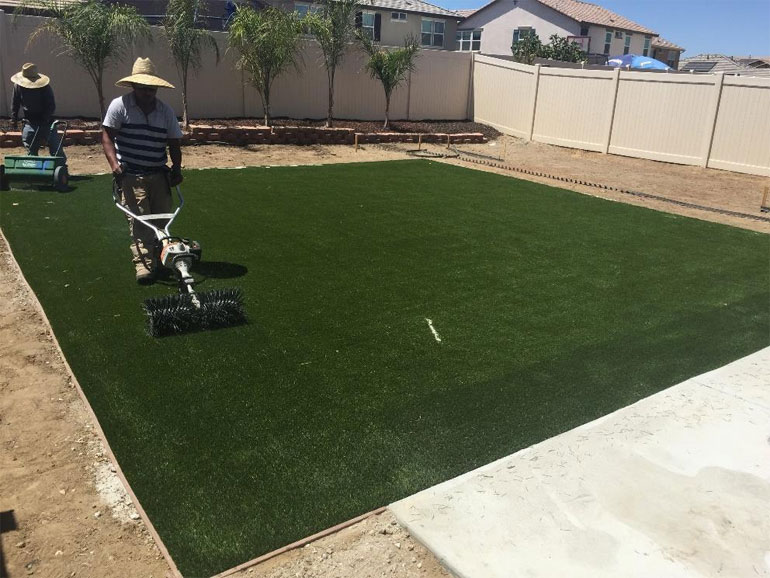
Spread the infill material evenly across the artificial grass. This step helps maintain the grass’s structure and provides a more natural feel. After spreading the infill, use a brush to work it into the grass fibers.

Step 8: Brush and Fluff the Grass
Brush and fluff the artificial grass using a broom with synthetic bristles. This process helps the grass blades stand upright and creates a fuller appearance.
Step 9: Final Adjustments
Inspect the installed artificial grass and make any necessary adjustments. Ensure the edges are secure and seamless, providing a polished look.
Step 10: Regular Maintenance
Artificial grass requires minimal maintenance, making it an attractive option for California’s climate. Regularly remove debris and leaves to maintain its appearance. Additionally, occasionally brushing the grass fibers will help keep them upright and ensure an even look.
Installing artificial grass in California is a wise choice for homeowners and businesses alike, given the state’s water scarcity and the need for sustainable landscaping solutions. By following these steps and considering the specific environmental factors of California, you can achieve a lush, green lawn year-round with minimal water usage and maintenance.
Tags
Installing artificial grass Brush and Fluff the Grass Secure the Grass Lay the Geotextile Fabric Remove Existing Turf Gather the Necessary Materials Planning and Preparation How to Install Artificial Grass How to Install Artificial turf