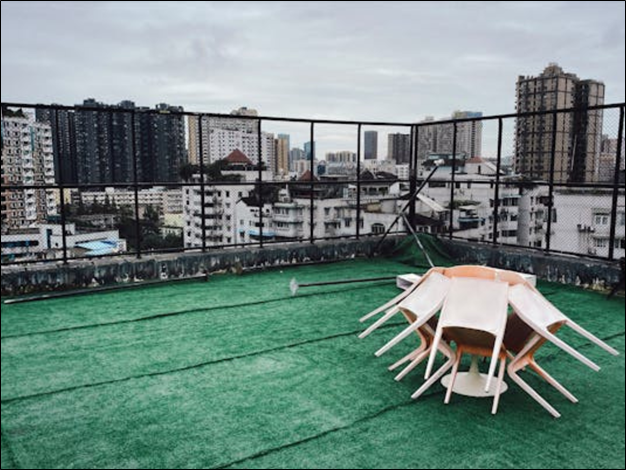
No more fertilizer, herbicide, or toxic runoff. Our turf solutions are not only maintenance-friendly—they’re non-toxic, lead-free, and PFAS-free, giving you peace of mind that your projects support a healthier outdoor environment for people, pets, and pollinators alike.
Less Maintenance = Lower Carbon Footprint
By removing the need for mowing, trimming, and constant upkeep, synthetic turf reduces reliance on gas-powered equipment. That means lower emissions, less noise pollution, and a cleaner footprint across residential and commercial landscapes.
Smarter Design for Smarter Cities
From LEED-certified developments to water-restricted regions, artificial grass is becoming the go-to solution for sustainability-driven design. It’s a future-proof upgrade that delivers lasting value and visual impact.
Before you get your vacuum out and hoover your synthetic lawn, there are two main concerns that you should be aware of:
– Damaging the artificial lawn fibres – Removing or damaging fake turf infills
Firstly, If you choose to hoover artificial grass, it may not be the best idea as it could damage the grass fibres. Using a vacuum, particularly a powerful one used in your home, could suck up and remove the grass fibres, balding your new lawn and worsening its appearance. This will require significant funds to repair, or force you to replace an entire roll of grass altogether. Hoovering will accelerate the damage, meaning repairs will have to be carried out more frequently.
Secondly, most artificial grass types require infills. Infills are a separate layer of product that lays under the surface, which sits between the blades of artificial grass to keep it springy and upright. This gives the grass a ‘bouncy’ and cushioned feel just like natural grass. Repeatedly hoovering the fake grass will suck up the infill, meaning the grass will sag and begin to lose its natural, springy feel. This is an important part of your lawn, and will significantly impact its appearance.
Therefore, we wouldn’t recommend using a conventional household hoover to remove debris and hair from your synthetic lawn. If your fake grass doesn’t require an infill, we still would advise against hoovering since the fibres can still be damaged.
Thinking about transforming your outdoor space with artificial grass? Choosing experts to do the work can make all the difference. This is why:
Expertise and Accuracy
Putting down fake grass takes skill and accuracy. They know how to properly prepare the ground so that the grass has a flat, stable base with the correct levels. They also know how to lay the grass so that there are no gaps, wrinkles, or irregular spots. With their skill, you can be sure of a perfect finish that feels and looks like real grass.
Think about the whole cost of installation and the grass quality when comparing charges for artificial grass. It’s tempting to go with the least expensive option, but cheap grass could not hold up as well or look as nice as the fancy stuff. Choose a warranty-backed, realistic-looking grass that is also resistant to ultraviolet light. Think about how much it will cost to install everything, including any necessary prep work like putting in new grass or leveling the ground.
Discovering Unbeatable Offers
You should look at and compare prices from several companies to get the greatest offers on synthetic grass. Find vendors that provide a variety of grass selections at reasonable pricing. Another way to save money is to buy in bulk or wait for sales. Some suppliers also offer discounts for bulk orders or returning clients. Lastly, when comparing pricing, remember to include the cost of installation. It can greatly affect the final cost.
When people begin to consider synthetic grass, they only have one image in mind—those ugly astroturf mats from the 70s.
Advancements in turf have come a long way since then. Now thousands of parks and homeowners across the country are installing synthetic grass because it looks beautiful year-round.
Installing artificial grass is a great option in drought-prone areas where using gallons of water daily is not an option. Modern turf is designed to have a natural look and feel that could fool almost anyone.
The fact is, that artificial turf might be one of the best options for your pet.
Sorry to say, one of the big killers of real grass is your dog.
The digging.
The scratching.
The urination.
We’ve all seen beautiful natural landscapes ruined by the constant toll of a few energetic pets. In a few short months, that pristine dog run can be transformed by potholes, mud, and dry, brown grass—the maintenance is endless!
Pet’s (and their owners) love synthetic turf!
It’s true. Turf has come a long way from the fake mats your grandma had. When installed correctly, they have great drainage, are easy to maintain, and are a breeze to clean.
At IntegriTurf, we work with you to choose the type of turf, infill, and drainage system to fit perfectly with the look and usage you have in mind. Many pet-friendly options will make having an artificial lawn the best option for your pet’s needs.
If you spill something on your artificial grass, quickly soak up any spillage with a clean cloth, absorbing as much as possible. Then use soap and warm water with a clean cloth or sponge to remove whatever’s left before rinsing with the garden hose.
Allow any pet waste to dry before removing it. This makes it easier.
If any ice forms on your fake lawn during the winter months, let it melt naturally rather than trying to remove it which could damage the blades.
Ash from cigarettes, fires, or BBQs could all melt your artificial grass so make sure to keep these things away from your lawn.
Rotate your garden furniture now and then to allow the artificial grass to spring back into shape and prevent it from being permanently flattened.
Consider trimming back hedges and overhanging trees to minimize the number of leaves that fall on your artificial grass.
Keep motorized garden tools away from your fake grass as they can also damage it.
The same goes for sharp or pointy objects, including stiletto heels or football boots with studs—as well as chewing gum which is a nightmare to remove from artificial grass.
While wheelbarrows, bikes, and wheelchairs are fine to use on artificial grass, motor vehicles should be kept off your lawn.
Mirrors, magnifying glasses, and other reflective surfaces can pose a danger to artificial lawns as they can cause burning.
If painting in the garden, put a sheet down to prevent any spillage on your artificial lawn.
It’s worth trying to train your dog or cat to do their business in a specific area of your garden away from your grass. This will minimise the amount of cleaning up you have to do.
Don’t pressure wash your artificial lawn as this could remove the infill, causing your lawn to look saggy.
No matter how big or small your home is – if you’re creative enough, you can make a play area anywhere.
Here are 5 imaginative ways to create the perfect play area.
Sensory Play
Sensory play areas are full of bright colours and different textures. You can create a soft and colourful indoor play area by using these great alphabet tiles. You could also add sensory toys, such as a colour changing lamp. Get creative with different sounds and smells to keep your baby entertained for hours.
Football Goals
Lay down some durable artificial grass in the garden, add some football goals at each end, and voila! A mini football field in your back garden. This is perfect for getting the kids outside for some fresh air and exercise. Alternatively, you could turn your outdoor play area into a mini rugby pitch or hockey field – whichever sport you fancy!
Make A Den
Every child loves making dens, as they provide a safe space of their own. Get some bed sheets and build a fort behind the sofa. If you have outdoor space, you can create the perfect den with a small shed and a lick of paint. If you’re feeling even more creative, why not build a treehouse or a platform like this one
A Sensory Garden
Create a sensory garden by planting colourful flowers and painting pots in a variety of colours. Flowers such as forget-me-nots and pansies are brightly coloured and will attract insects to your garden. Lambs ear plants (Stachys Byzantina) are velvety soft and easy to care for. You could also add a variety of herbs, such as mint and rosemary, which have vibrant and safe smells when rubbed between the fingers.
DIY Tyre Swing
If you’ve got a large and sturdy tree in your garden, why not create your own DIY Tyre Swing. You can buy special ropes which secure your swing to the tree so that nobody goes flying. You could also get creative and paint your tree swing in bright colours, or even in camouflage as part of an obstacle course.
Having a garden with a slope can be a problem, but there are many ways that you can make the most of it and create something beautiful. From waterfalls to layered flowerbeds, the opportunities are endless.
Here’s some garden slope design inspiration for transforming your steep garden into a tranquil paradise. We would recommend contacting a landscaper for professional advice, if you would like to speak to one of our BuzzGrass approved landscapers, contact them here.
Stepping Stones
Adding a path or stepping stones can help you to move freely up and down your garden, as well as creating a centrepiece to plant around. You can use slabs, rocks or even gravel to create the steps. For an added touch, you can add lighting under each step – perfect for evenings in the garden.
Taking care of your garden may seem daunting, but there are plenty of plants and flowers which require minimal effort. You can grow them in flower beds, hanging baskets or large pots. Why not take a trip to your local garden centre and have a look for these easy plants for beginners?
10 Easy Plants To Grow Outside
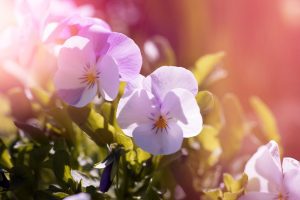
1. Pansies
The history of the Pansy flower originates all the way back to the 4th Century B.C in Greece. These were recorded as a flower called Violas plants, where Wild Pansies have stemmed from. Interestingly, all Pansies are Violas but not all Violas are Pansies.
You should plant your pansies in late spring in a spot with full sunlight. Water the flowers once or twice per week, depending on the heat. Pansies flourish in moist, well-drained soil, and should be planted 15cm apart to allow room for the roots to grow.
2. Sunflower
Sunflowers are known for producing oil and seeds, as well as being a colourful addition to your garden. They are native to the Americas and it is the state flower of Kansas. The tallest sunflower on record was 30 feet tall, which is almost two times the height of a giraffe.
Plant your sunflowers from mid-April to May in direct sunlight. Water several times per week for your flowers to grow tall. Once they have grown a meter tall, add some supports to help the stalk. In autumn once the flower has died, you can dry out the seeds in a conservatory and save them for next spring.
3. Marigolds
Marigolds originated in Mexico and are the flower of The Day of The Dead. It is believed that their vibrant colours and fragrance help to guide the spirits to their alters. They are also used in Diwali, the festival of lights, as a representation of new beginnings.
Plant the marigolds in spring for a colourful and bright garden throughout summer. Ensure they are in direct sunlight or dappled shade. The soil must be well-drained, as the flowers prefer a drier soil. Only water them once the topsoil is dry.
4. Peonies
Peonies are native to Asia, Europe and Western North America, and are the flower used to celebrate 12th wedding anniversaries. They are commonly known as a symbol of good fortune and come in every colour – except for blue.
Peonies can be planted anytime between October and March. They flourish in full sunlight and the soil must be well-drained. Peonies are perennials which mean they come back every year – perfect for beginners.
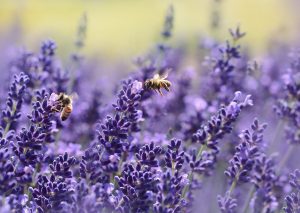
5. Lavender
The name “lavender” originates from the Latin verb “lavare”, which means “to wash”. Lavender was an important part of bathing rituals in ancient Rome because of its antiseptic properties. It is believed that the ancient Egyptians used lavender as perfume.
Plant lavender in April or May in well-drained soil. Lavender thrives in full sunlight and the bright flowers will attract honey bees to your garden. It is an evergreen shrub which produces flowers between July and September. With proper care, it will survive for years to come.
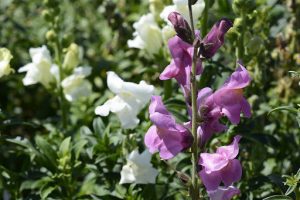
6. Snapdragon
The Snapdragon is named after its resemblance to the face of a dragon, which opens and closes when squeezed. They are native to Europe, the United States, and North Africa and come in a variety of different species and colours.
Plant your Snapdragon in April for a summer bloom. They love full sunlight and well-drained soil. Snapdragons are quite resilient and can bloom in cool spring temperatures if cared for.
7. Fuchsias
The Fuchsia originates from Chile, Argentina and Mexico and was named after famous German botanist Leonhart Fuchs. They are the favourite flower of hummingbirds due to their bright colour. The berries from fuchsia plants can be used to make jam, or can be sprinkled across salads.
Plant your Fuchsias in Spring in a spot with dappled shade. Ensure the soil is moist and well-drained – hanging planters are perfect as the soil can drain easily. In warmer countries, Fuchsias are perennials and will come back every year. However, in cooler climates such as the UK, they are most likely planted annually for the Spring and Summer months.
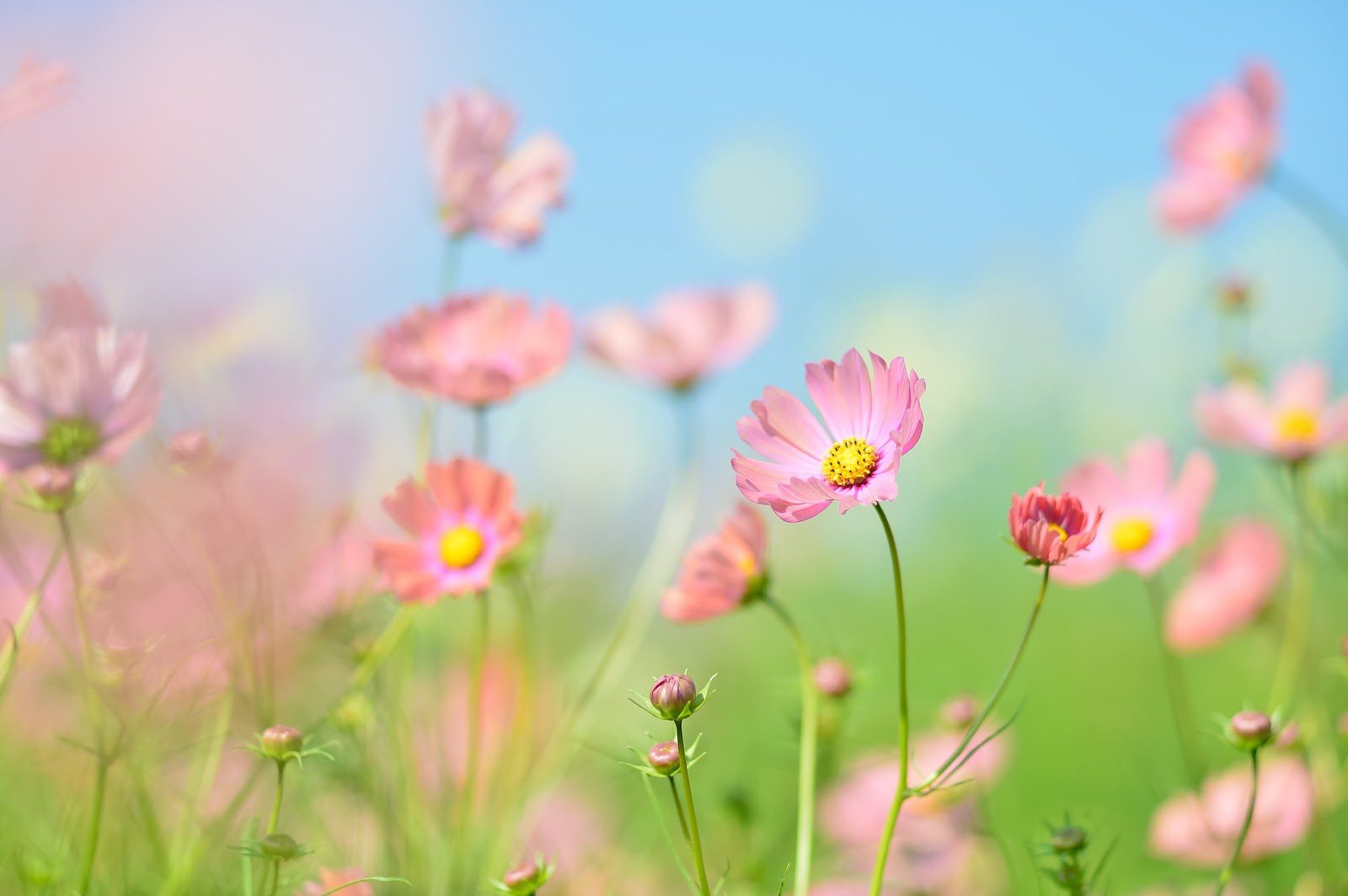
8. Cosmos
Cosmos flowers originated in Mexico, and are named after the Greek word for “a balanced universe”. They belong to the same family as the Daisy, and the Chocolate Cosmos species smells like chocolate and vanilla.
Plant Cosmos in June or July in full sunlight. They need protection from the wind, so try to plant them against a fence or a wall. Water them regularly, but be cautious as over-watering can lead to fewer flowers. The plants are quite tolerant once they have been cultivated, with some species being perennials, meaning they will reappear every year.
9. Eschscholzia (Californian Poppy)
The Eschscholzia, or Californian Poppy, originates in the United States and Mexico. Not only are these flowers vibrant and beautiful, but they are also used in a variety of modern medicines.
The Californian Poppy should initially be planted in early Spring, however, they are self-propagating and will return every year. The poppies flourish in full sunlight in well-drained soil. Be aware that they may spread across your flower bed, as they blow easily in the wind.
10. Geranium
The Geranium flower falls under the Pelargonium genus, which includes around 200 species of flowers and shrubs. They are sometimes referred to as “Crane’s Bill” flowers, due to their long, elongated seed pods.
The Geranium should be planted once spring has begun, as they must be protected against frost and cold. They require 6-8 hours of sunlight per day, and flourish in moist, well-drained soil. Deadhead your flowers regularly to encourage new growth.