Establishing a new brick and mortar is no small feat, often requiring countless hours of scouting, documenting, training, and marketing. Purchase Green, after opening 30+ locations since its founding in 2008, recognized this burden and has since formulated a Store Opening Procedure to minimize pain points in the onboarding process, for both corporate and franchise operations alike.
Even still, challenges persist no matter how prepared one might be. For this reason, newly opened Purchase Green stores are given a bit of reprieve for their first year, allowing these younger locations the opportunity to generate awareness and revenue – with the understanding that projected earnings will continue to rise over time.
So, it is quite remarkable when a Purchase Green store as young as six months has already breached $1 million in revenue – for the first time in this organization’s history – and with trends indicating there is still much to gain in their market. But how did Purchase Green Houston do it? And how might others mirror their success? We met with our Houston, Texas team for their insight into what they believe has set them apart.
The following interview was conducted by Parris King, our Content Marketing Manager, who spoke with Bob Felix, Regional Manager of Phoenix, Dallas, Houston, and Austin territories, as well as Jose Jimenez, Store Manager of Purchase Green Houston.
Opening a new business can be a daunting endeavor, but Purchase Green makes it easy for entrepreneurs to reach their true potential. Prospective business owners can rest assured knowing they are backed by a well-respected brand, a professional team, and a proven business model. Furthermore, Purchase Green showcases one of the fastest-growing distribution networks in the country. Franchise owners are supported from all aspects of the business journey with access to industry knowledge and the support of a dedicated franchise team. Interested in reviewing a market analysis for your area?
We are proud to announce that Purchase Green Artificial Grass has been named on Entrepreneur’s 2022 Top New & Emerging Franchises list. Every year, Entrepreneur devises a list of the top franchises to look out for in terms of investment and growth potential. This list is made up of the top 150 companies that have been ranked based on Entrepreneur’s extensive 150 data point system. This system evaluates and rates each company’s financial stability, franchisee support, brand strength, costs, and several other key factors.
artificial grass, synthetic turf, fake grass; what’s the difference? The term Astro Turf became synonymous with artificial grass, specifically for sports field applications. Astro turf is actually the name of an artificial grass brand (Kleenex is a brand of tissue, but we still often say “pass me a Kleenex”). A lot of times, the term can conjure up images of fake-looking, uncomfortable, surfaces like this one:
For that, and legal reasons, we don’t use the term. But we know that many still do. If you’re a contractor it’s good to be able to clarify the meaning to customers.
BuzzGrass installed at City of London Distillery Rooftop bar at Harvey Nichols Knightsbridge.
BuzzGrass South has recently completed an installation at a new rooftop bar on the fifth floor of London’s Harvey Nichols store. The terrace bar has been fitted with BuzzGrass artificial turf to provide a true outdoor aesthetic to the designer store’s flagship London premises. It’s a great example of using artificial grass in commercial spaces.
This is a brilliant example of the versatility of artificial grass, whether it’s indoors, outdoors or 5 stories above ground, we’ll bring the grass to you. Artificial turf is also suitable for:
Offices
Shops
Exhibitions
Gyms
The new installation is fitted with BuzzGrass Luxe. This specific product is backed with polyurethane, making it water-resistant with drainage holes for quick and effective water release; the 24mm pile height also gives a more realistic feel to the turf adding to the bar’s premium touch.
Creating an outdoor space for commercial use can come with its challenges, such as high footfall, frequent drink spillages and unreliable UK weather. However, artificial grass can be a great solution for bars and restaurants to add value to their outdoor space, as it is easy to clean and suitable for use in all weather without the risk of mud.
Tom Fielden, BuzzGrass Sales Manager, said “It’s amazing to work with such an established brand in the capital. The BuzzGrass South team and Harvey Nichols have worked to create a rooftop bar that mixes the feel of a premium outdoor restaurant with an elegant external drinking area.”
To help add some structure to your garden steps, you can build retaining walls to hold back the soil and create different levels in the garden. This will require help from a landscaper, but once the hard work is done, you can plant flowers and bushes around the top of the wall. You could even lay some Buzz Elite as a neat and low maintenance option.
Waterfall
A waterfall is the perfect garden feature and can attract an array of wildlife to your garden. This will require expert advice and planning to achieve. You will need to run tubing from the top to the bottom of the waterfall, to keep a continuous flow of water. You’ll also need large rocks and stones for the water to run down and to put around the edges.
Decking
Adding decking to your sloped garden can help to level it out, and create a seating area for you to enjoy. If your garden is large enough, you could add multiple sections of decking down the slope. Planting trees around the area can create enclosed spaces, so you can enjoy your coffee in the morning surrounded by nature.
Taking care of your garden may seem daunting, but there are plenty of plants and flowers which require minimal effort. You can grow them in flower beds, hanging baskets or large pots. Why not take a trip to your local garden centre and have a look for these easy plants for beginners?
10 Easy Plants To Grow Outside
1. Pansies
The history of the Pansy flower originates all the way back to the 4th Century B.C in Greece. These were recorded as a flower called Violas plants, where Wild Pansies have stemmed from. Interestingly, all Pansies are Violas but not all Violas are Pansies.
You should plant your pansies in late spring in a spot with full sunlight. Water the flowers once or twice per week, depending on the heat. Pansies flourish in moist, well-drained soil, and should be planted 15cm apart to allow room for the roots to grow.
2. Sunflower
Sunflowers are known for producing oil and seeds, as well as being a colourful addition to your garden. They are native to the Americas and it is the state flower of Kansas. The tallest sunflower on record was 30 feet tall, which is almost two times the height of a giraffe.
Plant your sunflowers from mid-April to May in direct sunlight. Water several times per week for your flowers to grow tall. Once they have grown a meter tall, add some supports to help the stalk. In autumn once the flower has died, you can dry out the seeds in a conservatory and save them for next spring.
3. Marigolds
Marigolds originated in Mexico and are the flower of The Day of The Dead. It is believed that their vibrant colours and fragrance help to guide the spirits to their alters. They are also used in Diwali, the festival of lights, as a representation of new beginnings.
Plant the marigolds in spring for a colourful and bright garden throughout summer. Ensure they are in direct sunlight or dappled shade. The soil must be well-drained, as the flowers prefer a drier soil. Only water them once the topsoil is dry.
4. Peonies
Peonies are native to Asia, Europe and Western North America, and are the flower used to celebrate 12th wedding anniversaries. They are commonly known as a symbol of good fortune and come in every colour – except for blue.
Peonies can be planted anytime between October and March. They flourish in full sunlight and the soil must be well-drained. Peonies are perennials which mean they come back every year – perfect for beginners.
5. Lavender
The name “lavender” originates from the Latin verb “lavare”, which means “to wash”. Lavender was an important part of bathing rituals in ancient Rome because of its antiseptic properties. It is believed that the ancient Egyptians used lavender as perfume.
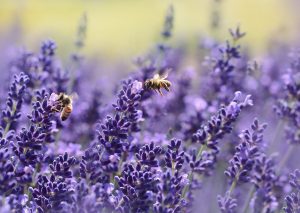
Plant lavender in April or May in well-drained soil. Lavender thrives in full sunlight and the bright flowers will attract honey bees to your garden. It is an evergreen shrub which produces flowers between July and September. With proper care, it will survive for years to come.
6. Snapdragon
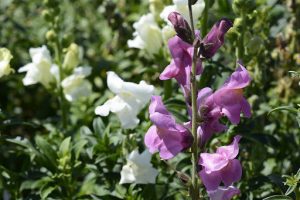
The Snapdragon is named after its resemblance to the face of a dragon, which opens and closes when squeezed. They are native to Europe, the United States, and North Africa and come in a variety of different species and colours.
Plant your Snapdragon in April for a summer bloom. They love full sunlight and well-drained soil. Snapdragons are quite resilient and can bloom in cool spring temperatures if cared for.
7. Fuchsias
The Fuchsia originates from Chile, Argentina and Mexico and was named after famous German botanist Leonhart Fuchs. They are the favourite flower of hummingbirds due to their bright colour. The berries from fuchsia plants can be used to make jam, or can be sprinkled across salads.
Plant your Fuchsias in Spring in a spot with dappled shade. Ensure the soil is moist and well-drained – hanging planters are perfect as the soil can drain easily. In warmer countries, Fuchsias are perennials and will come back every year. However, in cooler climates such as the UK, they are most likely planted annually for the Spring and Summer months.
8. Cosmos
Cosmos flowers originated in Mexico, and are named after the Greek word for “a balanced universe”. They belong to the same family as the Daisy, and the Chocolate Cosmos species smells like chocolate and vanilla.
Plant Cosmos in June or July in full sunlight. They need protection from the wind, so try to plant them against a fence or a wall. Water them regularly, but be cautious as over-watering can lead to fewer flowers. The plants are quite tolerant once they have been cultivated, with some species being perennials, meaning they will reappear every year.
9. Eschscholzia (Californian Poppy)
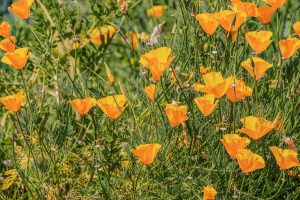
The Eschscholzia, or Californian Poppy, originates in the United States and Mexico. Not only are these flowers vibrant and beautiful, but they are also used in a variety of modern medicines.
The Californian Poppy should initially be planted in early Spring, however, they are self-propagating and will return every year. The poppies flourish in full sunlight in well-drained soil. Be aware that they may spread across your flower bed, as they blow easily in the wind.
10. Geranium
The Geranium flower falls under the Pelargonium genus, which includes around 200 species of flowers and shrubs. They are sometimes referred to as “Crane’s Bill” flowers, due to their long, elongated seed pods.
The Geranium should be planted once spring has begun, as they must be protected against frost and cold. They require 6-8 hours of sunlight per day, and flourish in moist, well-drained soil. Deadhead your flowers regularly to encourage new growth.
It’s easy to cut artificial turf the wrong way. It’s much harder and more expensive to fix the resulting problems.
To cut artificial grass correctly, you need sharp cutting tools, safety gear, and measuring instruments. A professional approach to cutting artificial turf can save you money while reducing waste and speeding up installation.
Let’s look at these effective ways of cutting artificial grass.
When buying repurposed turf you have two options; infill or extracted.
There are benefits to each, and which one is best for you is going to depend on your specific project needs. Considerations include budget, transportation, and logistics.
What is Repurposed Turf? Repurposed turf is typically used sports turf that’s been put to new use creating functional lawns for homes and businesses. That’s because sports turf is the best candidate for repurposing!
Regulations require that artificial turf sports fields be replaced every couple years, regardless of the condition of the field. Sports turf still has a long product life even after it’s been ripped up and replaced. This high quality product is designed to withstand the sharpest cleats and toughest tackles — so it should have no problem standing up to the challenges of everyday use!
There are a few misunderstandings about artificial grass that just aren’t true – from being too expensive to appearing false to being terrible for the environment – and these myths may be preventing you from choosing synthetic turf in your residential apartment or commercial property.
In this article, we address some of the most frequent fallacies about artificial turf, so you can be certain that it is the best option for you.
Myth 1: Synthetic Grass Looks Fake
When synthetic grass was initially developed, it may have appeared artificial and unlike natural grass. Nevertheless, synthetic turf has dramatically improved over the years, and higher-end surfaces like the ones we at Lawn King Inc. provide look and feel much like genuine grass.
This is due to the fact that LazyLawnwe produces yarns from the highest-quality polymers, resulting in the most realistic-looking items available. Indeed, our premium artificial grass has been manufactured to such a high degree that many people cannot tell the difference between a genuine lawn and an artificial one.