Category: Artificial Grass Cost

  • Why Is It Better to Use Professional Artificial Grass Installers?

    Thinking about transforming your outdoor space with artificial grass? Choosing experts to do the work can make all the difference. This is why:

    Expertise and Accuracy

    Fake Grass

    Putting down fake grass takes skill and accuracy. They know how to properly prepare the ground so that the grass has a flat, stable base with the correct levels. They also know how to lay the grass so that there are no gaps, wrinkles, or irregular spots. With their skill, you can be sure of a perfect finish that feels and looks like real grass.

  • Price Check: Navigating Artificial Grass Prices in South Africa

    Envision green grass that never becomes old or yellow from a lack of annual watering, mowing, or fertilizing. This is the hope held by the rapidly growing artificial grass industry in South Africa. The demand for artificial grass is increasing as more and more households and businesses look for sustainable and low-maintenance landscaping options. But it could be a pain to sort through all the different alternatives and prices. Learn more about the greatest offers on artificial grass in South Africa and how much it costs in this blog post.

    The Price of Artificial Grass: A Master Class

    The Price of Artificial Grass: A Master Class

    Factors such as grass quality, installation method, and area to be covered determine the price of artificial grass, which can vary greatly. The price of artificial grass is usually expressed as a square meter, with premium grass usually commanding a higher price tag. The choice between a professional installation and a do-it-yourselfer can also affect the final price tag. Further variables that could impact the final price tag include the infill material’s type and the presence or absence of extra features like drainage systems or UV protection.

  • Artificial Turf Myths

    There are a lot of concerns people have when they start considering a move to artificial turf. There are common myths about artificial turf that people take as fact.

    Will fake grass be safe for pets and children? Does artificial turf require maintenance? Will my fake grass look, well, fake?

    We’ve debunked 7 big myths about artificial turf that will help you decide what product is right for your lawn.

  • LOOKING AFTER ARTIFICIAL GRASS: MINIMUM EFFORT AND STRESS

    Compared to the time and energy required to keep a real grass lawn looking neat and tidy, maintaining artificial grass is incredibly easy. This is just one of the many advantages of swapping from real grass to fake grass.

    And if you look after it, your artificial grass could last from 15 to 25 years. For more information about the perks of artificial grass, get in touch to schedule your FREE site visit today.

  • ARTIFICIAL GRASS DO’S AND DON’TS

    1. If you spill something on your artificial grass, quickly soak up any spillage with a clean cloth, absorbing as much as possible. Then use soap and warm water with a clean cloth or sponge to remove whatever’s left before rinsing with the garden hose.
    2. Allow any pet waste to dry before removing it. This makes it easier.
    3. If any ice forms on your fake lawn during the winter months, let it melt naturally rather than trying to remove it which could damage the blades.
    4. Ash from cigarettes, fires, or BBQs could all melt your artificial grass so make sure to keep these things away from your lawn.
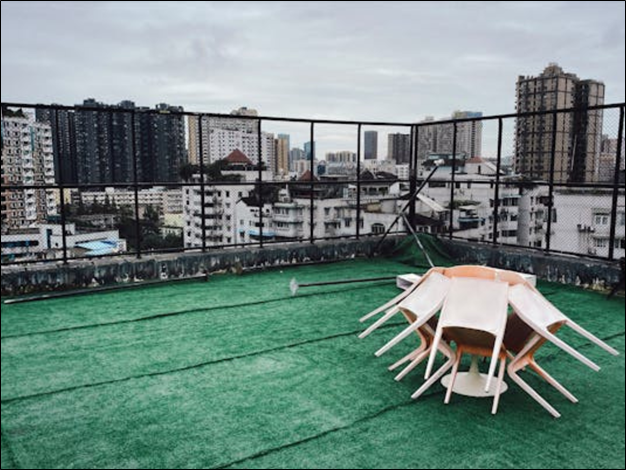
    5. Rotate your garden furniture now and then to allow the artificial grass to spring back into shape and prevent it from being permanently flattened.
    6. Consider trimming back hedges and overhanging trees to minimize the number of leaves that fall on your artificial grass.
    7. Keep motorized garden tools away from your fake grass as they can also damage it.
    8. The same goes for sharp or pointy objects, including stiletto heels or football boots with studs—as well as chewing gum which is a nightmare to remove from artificial grass.
    9. While wheelbarrows, bikes, and wheelchairs are fine to use on artificial grass, motor vehicles should be kept off your lawn.
    10. Mirrors, magnifying glasses, and other reflective surfaces can pose a danger to artificial lawns as they can cause burning.
    11. If painting in the garden, put a sheet down to prevent any spillage on your artificial lawn.
    12. It’s worth trying to train your dog or cat to do their business in a specific area of your garden away from your grass. This will minimise the amount of cleaning up you have to do.
    13. Don’t pressure wash your artificial lawn as this could remove the infill, causing your lawn to look saggy.
  • YOUR GUIDE TO ARTIFICIAL GRASS MAINTENANCE AND CARE

    You’ve made the jump from real grass to artificial grass and you’ve got no regrets. Thanks to your low-maintenance fake lawn that requires no mowing, strimming, or fertilizing (and never fades), you’ve got a vibrant green garden with no effort required and more time to actually enjoy it.

    But while artificial grass is much more low maintenance than real grass, that doesn’t mean it doesn’t need a bit of care and attention every now and again.

    Looking after your fake grass will ensure its longevity and allow it to maintain its fresh and healthy appearance for many years. A little light maintenance a few times a month will save you trouble and expense later down the line, keeping your fake lawn looking great for longer, as well as making it safer for kids and pets to play.

    • – So, what’s the best way to maintain artificial grass?
    • – How do you clean artificial grass?
    • – What else can you do to prolong the lifespan of your fake lawn?
    • – And what should you definitely not do when it comes to artificial grass?
  • Growth and Sustained Success in a Fragmented Market


    Many of us still remember the earliest generations of artificial grass – reminiscent of our grandparents’ carpet from the ’60s. Compared to today’s synthetic products, it’s easy to appreciate the progress made in manufacturing technology and the utilization of applied sciences in material production – further propelling market value amidst significant cultural shifts.Anthony Vena, President and CEO of Purchase Green Artificial Grass – a business begun as a small startup in Southern California in early 2008 with now more than 30 locations nationwide – describes his witness of these industry advancements and the subsequent changes in consumer perception:

    “Improvements in manufacturing combined with an increase in available skilled labor and water conservation efforts have created a more natural appearance at a cost that is now more acceptable to a significantly larger base of homeowners, while simultaneously offering a viable solution to water conservation.  Additionally, with a broader cultural change – with more folks valuing free time over the “therapeutic” benefits of gardening & landscaping – it offers a solution: a beautiful, natural-looking, low maintenance yard.”

    As production quality improved and consumer demand increased, the early 2000s experienced an emergence of commercial manufacturers, distributors, and installers, seemingly saturating and dominating the market. However, as reported by Mordor Intelligence in an artificial turf market forecast for the 2021 to 2026 fiscal years, the market is in fact moderately fragmented – presenting few obstacles and limiting boundaries for those wanting to enter the industry.

    “Generally, folks looking to start a business or enter a business want to be involved in emerging industries”, states Anthony Vena, “Rarely do folks want to enter a mature industry with little growth outlook. Artificial grass IS that growth industry. It is still in the early stages of adoption with lots of untapped markets and geographies; in states where it is a bit more mature (like the southwest), it is still growing at >15% per year. With improvements in manufacturing technology, there are more and more use applications available to folks within the industry, which adds to the growth outlook.”

  • Is the Future Grim or Green for the Artificial Turf Industry?

    The latest generation of the landscape industry has taken root, growing exponentially in the last several decades – and, ironically, it’s synthetic.  

    Artificial grass, since its initial introduction to the residential market in the early 1990s, has steadily gained traction as a result of the opportunities it presents in resource and environmental conservation, its versatility in design and application, as well as its potential for profitability in a variety of business models.

    But has the market already capped? Have aspiring business owners missed their window? Is there any more room for advancement, innovation, or growth? We asked artificial turf industry experts for their take on artificial turf’s viability and sustainability in the economic landscape.   

  • What is your process for identifying quality artificial grass installers?

    Parris: “Bob, you are a Purchase Green veteran. By now you’ve helped establish several of our stores – so, what do you think are Houston’s key strengths and/or advantages that have set it up for success?”

    Bob: “We found that the further we are moving into the Southeast, there is less direct competition; and what competition is here, they have a much higher markup. Houston is fairly untapped with a strong middle class, and even though it did take a little bit of time for people to find us, we were still able to make a splash as soon as we got here.”

    Parris: “Interesting. Following that, what do you think sets Purchase Green Houston apart from the competition that is there?”

    Jose: “We’re focused on building relationships with our contractors; and because of that networking, we’re receiving new contractor customers every week.”

    Bob: “Yes, exactly. We have a number of relationships that we heavily nurture – it also helps to not have to rely on our Master Distribution Center in California for materials, but instead grow the Houston warehouse as the next ‘hub’, so we always have stock on hand. But we still have to groom installers out here – there’s just not a big installer culture in Texas like there is in California. We’re trying to educate them, but we’re just barely breaking the first couple of layers on that.”

    Parris: “I love how focused your team is on your contractor customer base. Purchase Green as an organization really does encourage that for all of our stores because contractors will ultimately be your bread and butter. Jose, you really hit the nail on the head there with emphasizing those relationships – and from your experience, what would you say is necessary to have or do in order to build a strong network of contractors?”

    Jose: “Well, I treat them like they’re a part of the Purchase Green family – because they are, really. To me, I talk to them like they’re my friends, and I know they appreciate that.”

    Bob: “That’s a big deal, and I try to do the same thing in other stores – you want to make the conversations loose but with the education aspect on point. Maintain that sort of atmosphere in the store if you can because when you think about it from the customer’s perspective, they’re finally away from the job – they’ve been out on the field all day or running estimates, and by the time they get to you they need a place to decompress. I’ve even had people tell me, ‘This place is like my living room’ – especially when you’ve created an inviting showroom space with plants, furniture, and other decorative elements – I mean, I love Purchase Green Houston’s showroom atmosphere.”

    Parris: “Absolutely. Customer service at that level truly boosts the potential of a store, in addition to creating a comfortable environment. Although, as we head toward the close of Houston’s first fiscal year and gear up for the 2022 season, what do you see as being possible next steps to advance Houston even further?

    Bob: “We’re still trying to rev up our Install Partners. When you land in these markets that are more-or-less un-tapped, it’s tough to manage all of the incoming leads when you have a limited capacity for installations. You know, you have to make all of these relationships with contractors when you’re new to the area and learn who’s who – and you can’t go to the next step without having that reliable pool of quality Install Partners first. So, for Purchase Green Houston, we’re trying to meet as many contractors as we can to build our Partner program, and then we can begin to work on In-House Installation teams.”

    Parris: “What is your process for identifying quality artificial grass installers?”

    Jose: “One of the things that I like to do, as one example, is after a contractor purchases from us I’ll do a personal follow up call to ask how the job went, if they could send any pictures, or if there’s anything else they needed – and at that time they usually share their learning experiences from that job.”

    Bob: “Yes, you should be given, or you should request pictures of their installs, but also try to visit them on-site if you can. And there is a certain level of professionalism that you should expect from your partners, so I like to meet with them in-store to get a sense of how they are in person. Also the simple things, like going out to look at their truck and getting a sense of how they present themselves.”

    Parris: “And how do you approach the balance of maintaining an in-house crew with Installation Partners?”

    Bob: “You have to get your Install Partners strong before you think about in-house. In-house teams are a whole other type of responsibility; you have to make sure you can be on top of training the crew as well as your estimators. I would say focus on your partners for the first year, at least.”

    Parris: “So, it’s getting a handle on who is available to you in the area, nurturing those partnerships, and then building your own in-house team over time – although while still maintaining those contractor relationships even after the fact?”

    Bob: “Oh yeah, there’s enough to go around – especially in large markets like Houston.”

    Parris: “Got it. Well, that’s all the time we have for this call – thank you guys for sharing your availability with me, I appreciate your time. We’ll talk soon!”
  • Purchase Green Houston Breaks $1 Million in First 6 Months

    Establishing a new brick and mortar is no small feat, often requiring countless hours of scouting, documenting, training, and marketing. Purchase Green, after opening 30+ locations since its founding in 2008, recognized this burden and has since formulated a Store Opening Procedure to minimize pain points in the onboarding process, for both corporate and franchise operations alike.

    Even still, challenges persist no matter how prepared one might be. For this reason, newly opened Purchase Green stores are given a bit of reprieve for their first year, allowing these younger locations the opportunity to generate awareness and revenue – with the understanding that projected earnings will continue to rise over time.

    So, it is quite remarkable when a Purchase Green store as young as six months has already breached $1 million in revenue – for the first time in this organization’s history – and with trends indicating there is still much to gain in their market. But how did Purchase Green Houston do it? And how might others mirror their success? We met with our Houston, Texas team for their insight into what they believe has set them apart.

    The following interview was conducted by Parris King, our Content Marketing Manager, who spoke with Bob Felix, Regional Manager of Phoenix, Dallas, Houston, and Austin territories, as well as Jose Jimenez, Store Manager of Purchase Green Houston.